
IDENTIFYING EGPA PATIENTS

Clinical manifestations of EGPA vary depending on organ involvement

Eosinophilic granulomatosis with polyangiitis (EGPA), formerly known as Churg-Strauss syndrome, is a rare disease defined by eosinophil-rich and necrotizing granulomatous inflammation, and necrotizing vasculitis predominately affecting small to medium vessels.1-3


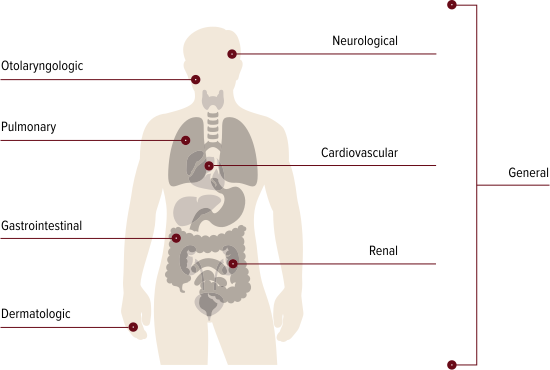
All EGPA patients are different. Patients may present with single- or multiple-organ involvement. Organs and organ systems that may be impacted by EGPA include4-6:

Diagram of organs that may be impacted by EGPA

Vasculitis and EGPA classification

How many of your patients with vasculitis could have EGPA?


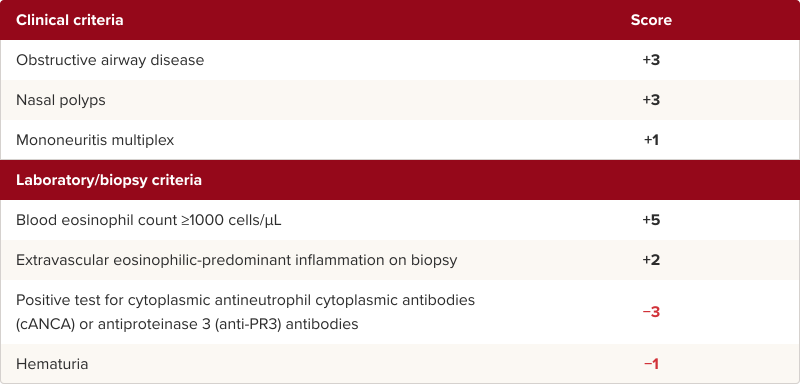
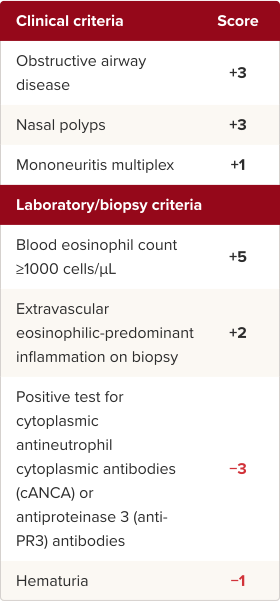
In these classification criteria, for patients with vasculitis: a cumulative score of ≥6 points yields an 85% sensitivity and 99% specificity for EGPA.1*


2022 ACR/EULAR classification criteria for EGPA1

The 2022 ACR/EULAR classification criteria for EGPA

The 2022 ACR/EULAR classification criteria for EGPA

*The 2022 ACR/EULAR classification criteria are meant for classification and not diagnostic purposes. These criteria should be applied when a diagnosis of small- or medium-vessel vasculitis has been made. Alternative diagnoses mimicking vasculitis should be excluded prior to applying these criteria.1

NUCALA patient types icon

Learn more about the NUCALA EGPA patient

ACR/VF recommendations include NUCALA as a treatment for appropriate patients with EGPA7

NUCALA is conditionally recommended as an add-on treatment option for appropriate patients with EGPA in the 2021 ACR/VF Guideline for the Management of ANCA-Associated Vasculitis. All EGPA recommendations in the Guideline are conditional due in part to the lack of multiple randomized controlled trials and/or low-quality evidence supporting the recommendations.7

Possible diagnostic evaluations

    Differentiating EGPA from HES 

    Characteristics and clinical manifestations of EGPA overlap with those of hypereosinophilic syndrome (HES). See below for similarities and differences between these two conditions.14

      Features of EGPA include:   Features of HES include:
      Eosinophilia >10%15   Peripheral blood hypereosinophilia (>1500 cells/μL on ≥2 occasions at least 1 month apart)16
      Eosinophil-rich, necrotizing granulomatous vasculitis affecting small- to medium-sized vessels2   Vasculitic complications are rare15
      Frequent asthma and nasal polyps15   Pulmonary manifestations occur; presence of asthma and nasal polyps is rare15
      ~40% of patients have ANCA antibodies8,10   ANCA-negative15
      Patients may experience systemic manifestations   Patients may experience systemic manifestations

    ACR=American College of Rheumatology; EULAR=European Alliance of Associations for Rheumatology.

    Hear from a peer about NUCALA

    EGPA vs HES | 9:06

    An expert in immunology describes how to differentiate two diseases related to peripheral blood eosinophilia: eosinophilic granulomatosis with polyangiitis (EGPA) and hypereosinophilic syndrome (HES).

    INDICATIONS & IMPORTANT SAFETY INFO

    INDICATIONS

    IMPORTANT SAFETY INFORMATION

    INDICATIONS

    NUCALA is indicated for the: 

    • treatment of adult patients with eosinophilic granulomatosis with polyangiitis (EGPA).
    • add-on maintenance treatment of adult and pediatric patients aged 6 years and older with severe asthma and with an eosinophilic phenotype. NUCALA is not indicated for the relief of acute bronchospasm or status asthmaticus.
    • add-on maintenance treatment of chronic rhinosinusitis with nasal polyps (CRSwNP) in adult patients aged 18 years and older with inadequate response to nasal corticosteroids.
    • add-on maintenance treatment of adult patients with inadequately controlled chronic obstructive pulmonary disease (COPD) and an eosinophilic phenotype. NUCALA is not indicated for the relief of acute bronchospasm.
    • treatment of adult and pediatric patients aged 12 years and older with hypereosinophilic syndrome (HES) for greater than or equal to 6 months without an identifiable non-hematologic secondary cause. 

    IMPORTANT SAFETY INFORMATION

    CONTRAINDICATIONS

    Known hypersensitivity to mepolizumab or excipients.


    WARNINGS AND PRECAUTIONS

    Hypersensitivity Reactions

    Hypersensitivity reactions (eg, anaphylaxis, angioedema, bronchospasm, hypotension, urticaria, rash) have occurred with NUCALA. These reactions generally occur within hours of administration but can have a delayed onset (ie, days). Discontinue if a hypersensitivity reaction occurs.


    Acute Symptoms of Asthma or COPD or Acute Deteriorating Disease

    NUCALA should not be used to treat acute symptoms or acute exacerbations of asthma or COPD, or acute bronchospasm.


    Opportunistic Infections: Herpes Zoster

    Herpes zoster infections have occurred in patients receiving NUCALA. Consider vaccination if medically appropriate.


    Reduction of Corticosteroid Dosage

    Do not discontinue systemic or inhaled corticosteroids abruptly upon initiation of therapy with NUCALA. Decreases in corticosteroid doses, if appropriate, should be gradual and under the direct supervision of a physician. Reduction in corticosteroid dose may be associated with systemic withdrawal symptoms and/or unmask conditions previously suppressed by systemic corticosteroid therapy.


    Parasitic (Helminth) Infection

    Treat patients with pre-existing helminth infections before initiating therapy with NUCALA. If patients become infected while receiving NUCALA and do not respond to anti-helminth treatment, discontinue NUCALA until infection resolves.


    ADVERSE REACTIONS

    Most common adverse reactions (≥5%):

    • Severe asthma trials: headache, injection site reaction, back pain, fatigue
    • CRSwNP trial: oropharyngeal pain, arthralgia
    • COPD trials: back pain, diarrhea, cough
    • EGPA and HES trials (300 mg of NUCALA): most common adverse reactions were similar to severe asthma

    Systemic reactions, including hypersensitivity, occurred in clinical trials in patients receiving NUCALA. Manifestations included rash, pruritus, headache, myalgia, flushing, urticaria, erythema, fatigue, hypertension, warm sensation in trunk and neck, cold extremities, dyspnea, stridor, angioedema, and multifocal skin reaction. A majority of systemic reactions were experienced the day of dosing.


    USE IN SPECIFIC POPULATIONS

    The data on pregnancy exposures are insufficient to inform on drug-associated risk. Monoclonal antibodies, such as mepolizumab, are transported across the placenta in a linear fashion as the pregnancy progresses; therefore, potential effects on a fetus are likely to be greater during the second and third trimesters.


    Please see full Prescribing Information and Patient Information for NUCALA.

    PMUS-MPLWCNT240087 May 2025

    To report SUSPECTED ADVERSE REACTIONS, contact GSK at gsk.public.reportum.com or 1-888-825-5249 or
    FDA at 1-800-FDA-1088 or www.fda.gov/medwatch.

    References

    1. Grayson PC, Ponte C, Suppiah R, et al. 2022 American College of Rheumatology/European Alliance of Associations for Rheumatology Classification Criteria for Eosinophilic Granulomatosis With Polyangiitis. Arthritis Rheumatol. 2022;74(3):386-392.

    2. Jennette JC, Falk RJ, Bacon A, et al. 2012 Revised International Chapel Hill Consensus Conference Nomenclature of Vasculitides. Arthritis Rheum. 2013;65(1):1-11.

    3. Latorre M, Baldini C, Seccia V, et al. Asthma control and airway inflammation in patients with eosinophilic granulomatosis with polyangiitis. J Allergy Clin Immunol Pract. 2016;4(3):512-519.

    4. Moosig F, Bremer JP, Hellmich B, et al. A vasculitis centre based management strategy leads to improved outcome in eosinophilic granulomatosis and polyangiitis (Churg-Strauss, EGPA): monocentric experiences in 150 patients. Ann Rheum Dis. 2013;72(6):1011-1017.

    5. Baldini C, Talarico R, Della Rossa A, Bombardieri S. Clinical manifestations and treatment of Churg-Strauss syndrome. Rheum Dis Clin North Am. 2010;36(3):527-543.

    6. Noth I, Strek ME, Leff AR. Churg-Strauss syndrome. Lancet. 2003;361(9357):587-594.

    7. Chung SA, Langford CA, Maz M, et al. 2021 American College of Rheumatology/Vasculitis Foundation Guideline for the Management of Antineutrophil Cytoplasmic Antibody-Associated Vasculitis. Arthritis Rheumatol. 2021;73(8):1366-1383.

    8. Groh M, Pagnoux C, Baldini C, et al. Eosinophilic granulomatosis with polyangiitis (Churg-Strauss) (EGPA) Consensus Task Force recommendations for evaluation and management. Eur J Intern Med. 2015;26(7):545-553.

    9. Pagnoux C. Updates in ANCA-associated vasculitis. Eur J Rheumatol. 2016;3(3):122-133.

    10. Comarmond C, Pagnoux C, Khellaf M, et al. Eosinophilic granulomatosis with polyangiitis (Churg-Strauss): clinical characteristics and long-term followup of the 383 patients enrolled in the French Vasculitis Study Group cohort. Arthritis Rheum. 2013;65(1):270-281.

    11. Hagen EC, Daha MR, Hermans J, et al. Diagnostic value of standardized assays for anti-neutrophil cytoplasmic antibodies in idiopathic systemic vasculitis. EC/BCR Project for ANCA Assay Standardization. Kidney Int. 1998;53(3):743-753.

    12. Sablé-Fourtassou R, Cohen P, Mahr A, et al. Antineutrophil cytoplasmic antibodies and the Churg-Strauss syndrome. Ann Intern Med. 2005;143(9):632-638.

    13. Sinico RA, Di Toma L, Maggiore U, et al. Prevalence and clinical significance of antineutrophil cytoplasmic antibodies in Churg-Strauss syndrome. Arthritis Rheum. 2005;52(9):2926-2935.

    14. Leurs A, Chenivesse C, Lopez B, et al. C-Reactive protein as a diagnostic tool in differential diagnosis of hypereosinophilic syndrome and antineutrophil cytoplasmic antibody-negative eosinophilic granulomatosis with polyangiitis. J Allergy Clin Immunol Pract. 2019;7(4):1347-1351.

    15. Vaglio A, Buzio C, Zwerina J. Eosinophilic granulomatosis with polyangiitis (Churg-Strauss): state of the art. Allergy. 2013;68(3):261-273.

    16. Valent P, Klion AD, Horny HP, et al. Contemporary consensus proposal on criteria and classification of eosinophilic disorders and related syndromes. J Allergy Clin Immunol. 2012;130(3):607-612.