
AT-HOME, ONCE-MONTHLY* DOSING & ADMINISTRATION

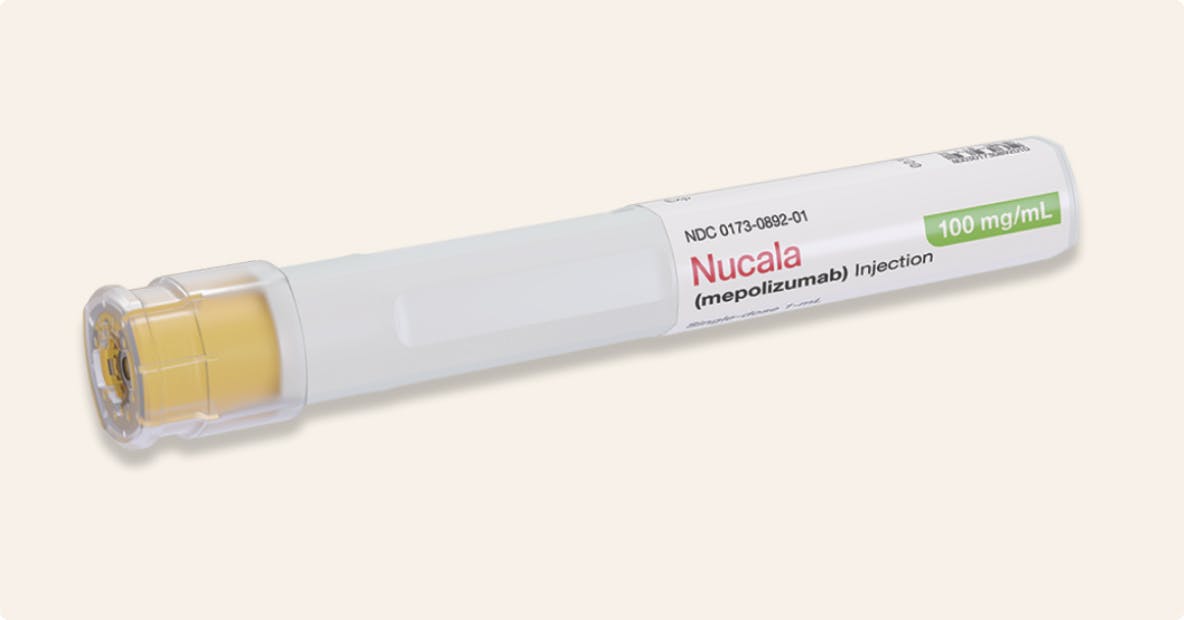
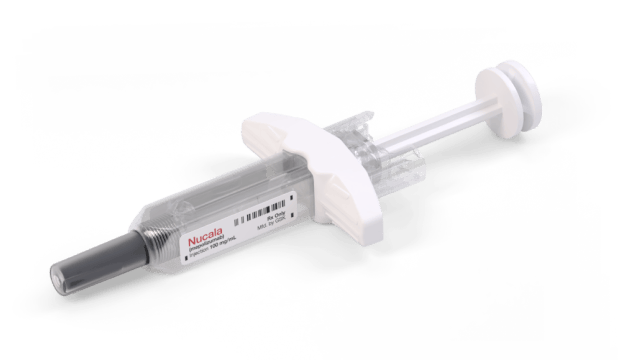
NUCALA Autoinjector

Consider at-home treatment with the NUCALA Autoinjector

Once-monthly* NUCALA is a fixed dose (independent of weight) SC injection with no loading dose. The dose is 100 mg for CRSwNP patients.

*Every 4 weeks.
SC=subcutaneous.

What does your CRSwNP patients’ dosing schedule look like?

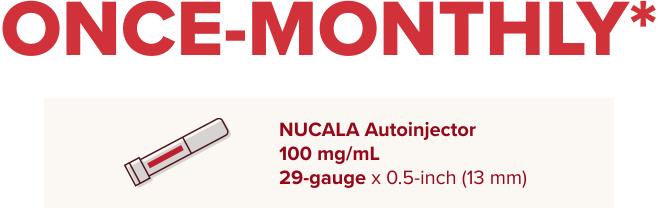
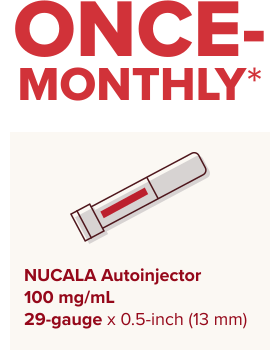
NUCALA’S SIMPLE DOSING SCHEDULE

NUCALA's simple dosing schedule: once-monthly NUCALA Autoinjector 100 mg/mL 29-gauge x 0.5-inch (13 mm)

*Every 4 weeks.

Study assessed ease of use & convenience

In patients with severe eosinophilic asthma (SEA)

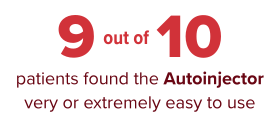
EASY TO USE1

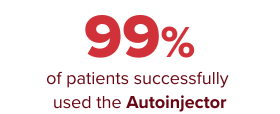
9 out of 10 patients found the Autoinjector very or extremely easy to use99% of patients successfully used the Autoinjector

CONVENIENT TO USE2

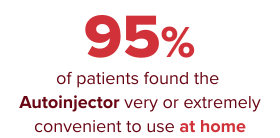
95% of patients found the Autoinjector very or extremely convenient to use at home

    How to use the NUCALA Autoinjector at home

    How to use your prefilled Autoinjector | 4:58

    Share this video with your patients to help them get comfortable with injecting NUCALA at home.

    Autoinjector full Instructions for Use picture_as_pdf

    Warnings, Storage Info, Dosing, Admin Info keyboard_arrow_down

    NUCALA 100 mg/mL prefilled syringe for at-home use

    NUCALA 100 mg/mL prefilled syringe for at-home use

    A patient may self-inject or a caregiver may administer subcutaneously after the healthcare provider determines it is appropriate.

    How to use the NUCALA 100 mg/mL prefilled syringe at home

    How to use your prefilled syringe | 7:30

    This video provides a detailed guide to show patients how to inject NUCALA with the prefilled syringe.

    100 mg/mL prefilled syringe full Instructions for Use picture_as_pdf

    Warnings, Storage Info, Dosing, Admin Info keyboard_arrow_down

    For NUCALA Autoinjector or 100 mg/mL prefilled syringe

    AT-HOME DOSING & ADMINISTRATION

    • Fixed 100-mg dose independent of weight
    • NUCALA may be administered by the patient or a caregiver
    • SC injection every 4 weeks into the thigh or abdomen (or upper arm by caregiver)
    • Intended for use under HCP guidance. Provide proper training on injection technique and administration using the full Instructions for Use after determining at-home use is appropriate
    • Download a guide to getting appropriate patients started with at-home administration

    Keep NUCALA and all medicines away from children.

    WARNINGS

    • Do not use any Autoinjector or prefilled syringe more than 1 time
    • Do not share the Autoinjector or prefilled syringe with other people
    • Do not use the Autoinjector or prefilled syringe if it was dropped or looks damaged

    STORAGE

    • Store in the refrigerator between 36°F to 46°F (2°C to 8°C)
    • Keep in the original carton until time of use to protect from light
    • Do not freeze
    • Do not shake
    • Keep away from heat
    • If necessary, an unopened carton can be stored outside the refrigerator at up to 86°F (30°C) for up to 7 days
    • Do not use the Autoinjector or prefilled syringe if it has been left out of the carton for more than 8 hours

    Navigate a NUCALA prescription

    INDICATIONS & IMPORTANT SAFETY INFO

    INDICATIONS

    IMPORTANT SAFETY INFORMATION

    INDICATIONS

    NUCALA is indicated for the: 

    • add-on maintenance treatment of chronic rhinosinusitis with nasal polyps (CRSwNP) in adult patients aged 18 years and older with inadequate response to nasal corticosteroids.
    • add-on maintenance treatment of adult and pediatric patients aged 6 years and older with severe asthma and with an eosinophilic phenotype. NUCALA is not indicated for the relief of acute bronchospasm or status asthmaticus.
    • add-on maintenance treatment of adult patients with inadequately controlled chronic obstructive pulmonary disease (COPD) and an eosinophilic phenotype. NUCALA is not indicated for the relief of acute bronchospasm.
    • treatment of adult patients with eosinophilic granulomatosis with polyangiitis (EGPA).
    • treatment of adult and pediatric patients aged 12 years and older with hypereosinophilic syndrome (HES) for greater than or equal to 6 months without an identifiable non-hematologic secondary cause.

    IMPORTANT SAFETY INFORMATION

    CONTRAINDICATIONS

    Known hypersensitivity to mepolizumab or excipients.


    WARNINGS AND PRECAUTIONS

    Hypersensitivity Reactions

    Hypersensitivity reactions (eg, anaphylaxis, angioedema, bronchospasm, hypotension, urticaria, rash) have occurred with NUCALA. These reactions generally occur within hours of administration but can have a delayed onset (ie, days). Discontinue if a hypersensitivity reaction occurs.


    Acute Symptoms of Asthma or COPD or Acute Deteriorating Disease

    NUCALA should not be used to treat acute symptoms or acute exacerbations of asthma or COPD, or acute bronchospasm.


    Opportunistic Infections: Herpes Zoster

    Herpes zoster infections have occurred in patients receiving NUCALA. Consider vaccination if medically appropriate.


    Reduction of Corticosteroid Dosage

    Do not discontinue systemic or inhaled corticosteroids abruptly upon initiation of therapy with NUCALA. Decreases in corticosteroid doses, if appropriate, should be gradual and under the direct supervision of a physician. Reduction in corticosteroid dose may be associated with systemic withdrawal symptoms and/or unmask conditions previously suppressed by systemic corticosteroid therapy.


    Parasitic (Helminth) Infection

    Treat patients with pre-existing helminth infections before initiating therapy with NUCALA. If patients become infected while receiving NUCALA and do not respond to anti-helminth treatment, discontinue NUCALA until infection resolves.


    ADVERSE REACTIONS

    Most common adverse reactions (≥5%):

    • Severe asthma trials: headache, injection site reaction, back pain, fatigue
    • CRSwNP trial: oropharyngeal pain, arthralgia
    • COPD trials: back pain, diarrhea, cough
    • EGPA and HES trials (300 mg of NUCALA): most common adverse reactions were similar to severe asthma

    Systemic reactions, including hypersensitivity, occurred in clinical trials in patients receiving NUCALA. Manifestations included rash, pruritus, headache, myalgia, flushing, urticaria, erythema, fatigue, hypertension, warm sensation in trunk and neck, cold extremities, dyspnea, stridor, angioedema, and multifocal skin reaction. A majority of systemic reactions were experienced the day of dosing.


    USE IN SPECIFIC POPULATIONS

    The data on pregnancy exposures are insufficient to inform on drug-associated risk. Monoclonal antibodies, such as mepolizumab, are transported across the placenta in a linear fashion as the pregnancy progresses; therefore, potential effects on a fetus are likely to be greater during the second and third trimesters.


    Please see full Prescribing Information and Patient Information for NUCALA.

    PMUS-MPLWCNT240086 May 2025

    To report SUSPECTED ADVERSE REACTIONS, contact GSK at gsk.public.reportum.com or 1-888-825-5249 or
    FDA at 1-800-FDA-1088 or www.fda.gov/medwatch.

    References

    1. Bernstein D, Pavord ID, Chapman KR, et al. Usability of mepolizumab single-use prefilled autoinjector for patient self-administration. J Asthma. 2020;57(9):987-998.

    2. Data on file, GSK.