
EXPLORE SYNAPSE IN CRSwNP

All primary and secondary endpoints were met with statistical significance.1

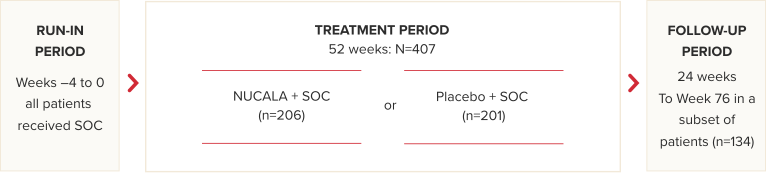
SYNAPSE: Study design1

SYNAPSE study designSYNAPSE study design


Description

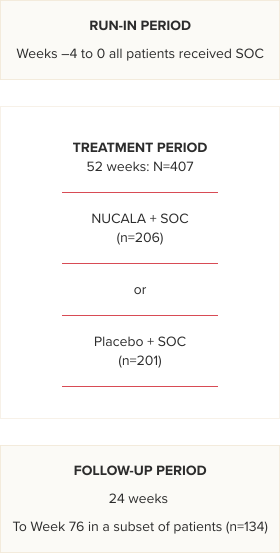
52-week, multicenter, randomized, double-blind, placebo-controlled, Phase 3 study with NUCALA 100 mg or placebo SC once every 4 weeks added to SOC* in 407 adult patients with recurrent chronic rhinosinusitis with nasal polyps.

*Defined as daily mometasone furoate nasal spray in addition to saline nasal irrigations, and courses of systemic corticosteroids and/or antibiotics as required.


Select inclusion criteria

  • At least 1 prior endoscopic nasal polyp surgery for the removal of nasal polyps over the past 10 years
  • Intranasal corticosteroid therapy for >8 weeks prescreening
  • Endoscopic bilateral nasal polyps score >5 out of a maximum of 8 (range of 0 to 4 in each nostril; higher score indicates worse status)
  • Nasal obstruction symptom score >5 out of a maximum of 10 (ranges from 0=none to 10=as bad as you can imagine)
  • Overall nasal polyp symptom score >7 out of a maximum of 10 (ranges from 0=none to 10=as bad as you can imagine)


Co-primary endpoints/results

  • LS mean change from baseline in total endoscopic nasal polyp score (centrally read) at Week 52: NUCALA + SOC, –0.87, vs placebo + SOC, 0.06; P<0.001.
  • LS mean change from baseline in median nasal obstruction score during Weeks 49-52: NUCALA + SOC, –4.40, vs placebo + SOC, –2.54; P<0.001.

LS means from an analysis using mixed model repeated measures with covariates of treatment group, geographic region, baseline score, and loge baseline blood eosinophil count visit, interaction terms for visit by baseline and visit by treatment.


Key secondary endpoint

  • Time to first nasal polyps surgery up to Week 52
    • Defined as any procedure involving instruments resulting in incision and removal of tissue (polypectomy) in the nasal cavity and the sinuses


Select secondary endpoints

  • Change from baseline in overall symptom score at Weeks 49-52
  • Change from baseline in mean individual symptom score for loss of smell at Weeks 49-52
  • Change from baseline in SNOT-22 total score at Week 52
  • Proportion of patients requiring systemic steroids for nasal polyps up to Week 52


Symptom scores

  • Based on daily patient-reported symptom severity using visual analog scale of 0 to 10 (0=none, 10=as bad as you can imagine)
  • Symptoms reported included nasal obstruction, nasal discharge, mucus in throat, facial pain, loss of smell


SNOT-222,3

  • A disease-specific measure of health-related quality of life that includes 22 items assessing symptoms and impact associated with CRS
  • Score ranges from 0 to 110; each item scored from 0 (no problem) to 5 (the problem is as bad as it can be)
  • 6 domains: nasal, non-nasal, ear/facial, sleep, fatigue, and emotional consequences


Nasal polyp score

  • Polyps on each side of the nose were graded on a categorical scale (0=no polyps, 1=small polyps in the middle meatus not reaching below the inferior border of the middle concha, 2=polyps reaching below the lower border of the middle turbinate, 3=large polyps reaching the lower border of the inferior turbinate or polyps medial to the middle concha, 4=large polyps causing almost complete congestion/obstruction of the inferior meatus)
  • Total score (sum of both nostrils) ranged from 0 to 8


SYNAPSE BASELINE CHARACTERISTICS1,2

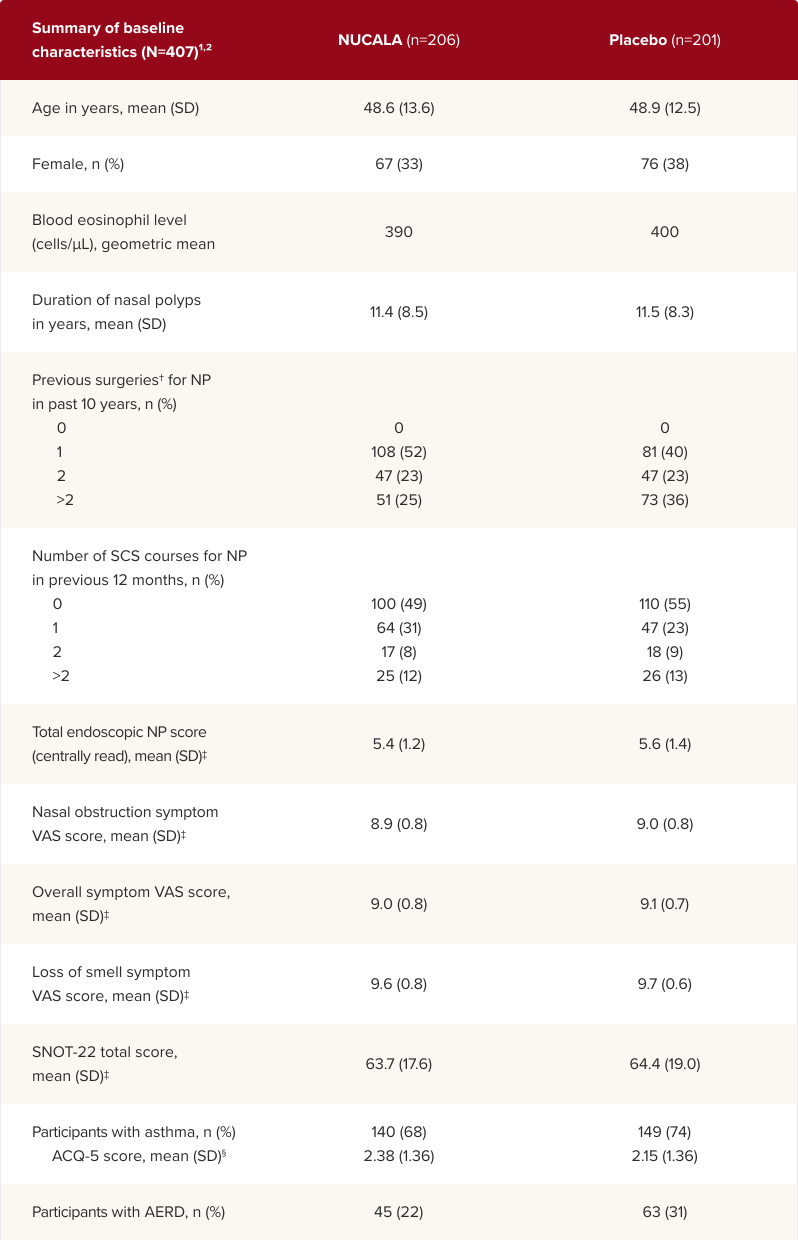
All patients in SYNAPSE had severe recurrent nasal polyps with a need for repeat surgery

SYNAPSE baseline patient characteristics

SYNAPSE baseline patient characteristics


Defined as any procedure involving instruments resulting in incision and removal of tissue (polypectomy) in the nasal cavity and the sinuses.  

Higher scores indicate greater disease severity. 

§ACQ-5 score of ≥1.5 indicates poorly controlled asthma.4

ACQ-5=Asthma Control Questionnaire (5-item); AERD=aspirin-exacerbated respiratory disease; CRS=chronic rhinosinusitis; LS=least squares; NP=nasal polyp; SC=subcutaneous; SCS=systemic corticosteroid; SD=standard deviation; SNOT-22=sino-nasal outcome test (22-item); SOC=standard of care; VAS=visual analog scale.

Nasal polyps patient Marco eating takeout food with three friends

CAN YOUR CRSwNP PATIENTS BENEFIT FROM NUCALA?

Nasal polyps patient Janet drinking coffee while talking to man on couch

EXPLORE NUCALA DATA IN CRSwNP PATIENTS

INDICATIONS & IMPORTANT SAFETY INFO

INDICATIONS

IMPORTANT SAFETY INFORMATION

INDICATIONS

NUCALA is indicated for the: 

  • add-on maintenance treatment of chronic rhinosinusitis with nasal polyps (CRSwNP) in adult patients aged 18 years and older with inadequate response to nasal corticosteroids.
  • add-on maintenance treatment of adult and pediatric patients aged 6 years and older with severe asthma and with an eosinophilic phenotype. NUCALA is not indicated for the relief of acute bronchospasm or status asthmaticus.
  • add-on maintenance treatment of adult patients with inadequately controlled chronic obstructive pulmonary disease (COPD) and an eosinophilic phenotype. NUCALA is not indicated for the relief of acute bronchospasm.
  • treatment of adult patients with eosinophilic granulomatosis with polyangiitis (EGPA).
  • treatment of adult and pediatric patients aged 12 years and older with hypereosinophilic syndrome (HES) for greater than or equal to 6 months without an identifiable non-hematologic secondary cause.

IMPORTANT SAFETY INFORMATION

CONTRAINDICATIONS

Known hypersensitivity to mepolizumab or excipients.


WARNINGS AND PRECAUTIONS

Hypersensitivity Reactions

Hypersensitivity reactions (eg, anaphylaxis, angioedema, bronchospasm, hypotension, urticaria, rash) have occurred with NUCALA. These reactions generally occur within hours of administration but can have a delayed onset (ie, days). Discontinue if a hypersensitivity reaction occurs.


Acute Symptoms of Asthma or COPD or Acute Deteriorating Disease

NUCALA should not be used to treat acute symptoms or acute exacerbations of asthma or COPD, or acute bronchospasm.


Opportunistic Infections: Herpes Zoster

Herpes zoster infections have occurred in patients receiving NUCALA. Consider vaccination if medically appropriate.


Reduction of Corticosteroid Dosage

Do not discontinue systemic or inhaled corticosteroids abruptly upon initiation of therapy with NUCALA. Decreases in corticosteroid doses, if appropriate, should be gradual and under the direct supervision of a physician. Reduction in corticosteroid dose may be associated with systemic withdrawal symptoms and/or unmask conditions previously suppressed by systemic corticosteroid therapy.


Parasitic (Helminth) Infection

Treat patients with pre-existing helminth infections before initiating therapy with NUCALA. If patients become infected while receiving NUCALA and do not respond to anti-helminth treatment, discontinue NUCALA until infection resolves.


ADVERSE REACTIONS

Most common adverse reactions (≥5%):

  • Severe asthma trials: headache, injection site reaction, back pain, fatigue
  • CRSwNP trial: oropharyngeal pain, arthralgia
  • COPD trials: back pain, diarrhea, cough
  • EGPA and HES trials (300 mg of NUCALA): most common adverse reactions were similar to severe asthma

Systemic reactions, including hypersensitivity, occurred in clinical trials in patients receiving NUCALA. Manifestations included rash, pruritus, headache, myalgia, flushing, urticaria, erythema, fatigue, hypertension, warm sensation in trunk and neck, cold extremities, dyspnea, stridor, angioedema, and multifocal skin reaction. A majority of systemic reactions were experienced the day of dosing.


USE IN SPECIFIC POPULATIONS

The data on pregnancy exposures are insufficient to inform on drug-associated risk. Monoclonal antibodies, such as mepolizumab, are transported across the placenta in a linear fashion as the pregnancy progresses; therefore, potential effects on a fetus are likely to be greater during the second and third trimesters.


Please see full Prescribing Information and Patient Information for NUCALA.

PMUS-MPLWCNT240086 May 2025

To report SUSPECTED ADVERSE REACTIONS, contact GSK at gsk.public.reportum.com or 1-888-825-5249 or
FDA at 1-800-FDA-1088 or www.fda.gov/medwatch.

References

  1. Han JK, Bachert C, Fokkens W, et al. Mepolizumab for chronic rhinosinusitis with nasal polyps (SYNAPSE): a randomised, double-blind, placebo-controlled, phase 3 trial. Lancet Respir Med. 2021;9(10):1141-1153.
  2. Data on file, GSK.
  3. Supplementary Appendix. Hopkins C, Gillett S, Slack R, Lund VJ, Browne JP. Psychometric validity of the 22-item Sinonasal Outcome Test. Clin Otolaryngol. 2009;34(5):447-454. 
  4. Juniper EF, Bousquet J, Abetz L, Bateman ED; GOAL Committee. Identifying 'well-controlled' and 'not well-controlled' asthma using the Asthma Control Questionnaire. Respir Med. 2006;100(4):616-621.